
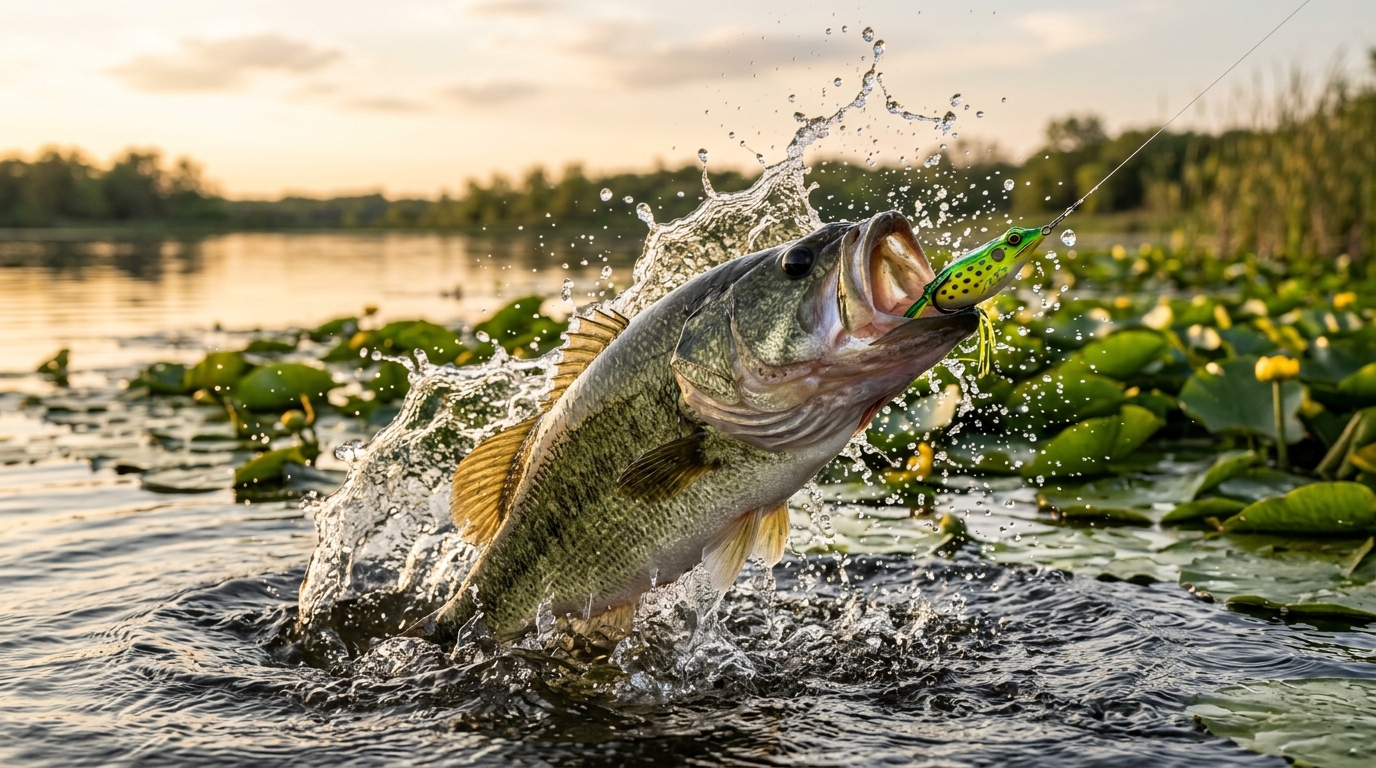
There is a narrow window each year when bass forget they are cautious. The water warms past sixty-five degrees, the spawn winds down, and suddenly the surface of your lake comes alive with explosions that look like someone dropped a cinder block from a tree. That window is right now — late spring into early summer — and the anglers who understand what is happening beneath those splashes will catch more fish than everyone else combined.
For more on this topic, see our guides on Bass Fishing Techniques, Early Summer Topwater.
The post-spawn topwater bite is not a gentle phase. It is messy, aggressive, and occasionally violent. Bass that were locked on beds two weeks ago are now guarding fry in shallow cover, and their parental instincts override every ounce of self-preservation they showed during the spawn. Throw the right bait in the right place, and you will get bit. Throw the wrong bait, or worse, the right bait in the wrong place, and you will swear the fish have vanished. They have not. You just need to adjust.
Why the Post-Spawn Topwater Bite Is Different
During the actual spawn, bass are focused on one thing only. They will bump lures off beds, chase threats a short distance, and then lock back down. Topwater presentations can work — particularly in the morning and evening — but the fish are operating on defense, not hunger. Once the spawn ends, the psychology shifts. Male bass guarding fry are hyper-aggressive toward anything that moves near their nursery areas. Bluegill, shad, frogs, even dragonflies that skate too close to the young — all of it gets attacked.
This is the key distinction. A spawning bass might swat a frog to move it along. A post-spawn bass guarding fry will crush a frog with the kind of commitment that bends a heavy rod. You want to be throwing lures that trigger that reaction bite, not the tentative taps you felt three weeks ago.
Water temperature is your best indicator of when the shift happens. Across most of the country, stabilize in the sixty-five to seventy-five degree range and you are in the zone. In the Southern U.S., this shift often hits by early May. Anglers on Florida lakes or Texas reservoirs may find the topwater bite already in full swing while their counterparts in the Great Lakes region are still waiting for overnight lows to stay above sixty. Regional timing matters, and the only way to know for sure is to watch your local conditions and be ready to move fast when they align.
The Lures That Actually Work Right Now
Not every topwater bait excels during this phase. The fish are shallow, often in less than four feet of water, and they are responding to specific triggers. Here is what is producing right now:
- Popping frogs — These excel in May because they mimic struggling bluegill on the surface, and bluegill are the primary forage base during the post-spawn period. Fish them over grass, lily pads, or any surface cover where fry might be hiding. Work them with short, sharp twitches that leave a bubble trail, then pause. The hit usually comes on the pause.
- Walking baits — When bass are in a post-spawn funk and need a slower, more deliberate presentation, walking baits shine. The side-to-side sashay imitates a wounded baitfish without the commotion of a popper. They work best on calm mornings when the surface is glass and the fish have time to track the lure.
- Wakebaits — Lures like the Clutch Wake Gill are effective when the bite is tough and bass want something they do not have to chase hard. The wakebait runs just below the surface, displacing water and creating a trail bass follow like a bloodhound. They are particularly useful when fish are sitting on the edge of grass lines or along docks.
- Buzz toads — Once the sun gets high and bass tuck under matted grass, a buzz toad retrieved steadily across the surface triggers explosive strikes from fish buried in shade. The key is keeping the bait moving fast enough to create a wake but slow enough that a bass can intercept it.
- Prop baits — When visibility is low — stained water, early morning, or overcast days — prop baits create both visual and auditory triggers. The dual props throw water and make a distinctive chugging sound that bass can home in on from several feet away.
Do not overthink color selection during this window. White, black, and frog-pattern baits will handle ninety percent of situations. If the water is clear, lean toward naturals. If stained, go with solid dark colors that create a sharp silhouette against the surface.
Where to Throw Your First Cast
Post-spawn bass are not randomly scattered. They are clustered around shallow cover near where they spawned, and their movements are predictable once you understand the pattern. Your first stops should always be the places that hold fry — and there are several types that consistently produce.
Grass and lily pad fields are obvious starting points, and for good reason. Fry use the stems and roots for cover, and bass patrol the edges like security guards. Cast parallel to the grass lines rather than straight into the middle. You want your lure staying in the strike zone longer, skirting the cover where bass are holding.
Docks and seawalls hold heat and attract bluegill, which means they attract bass. Focus on the corners and the first ten feet of walkway — the shaded areas where fry school up. A walking bait or wakebait worked along the shadow line will get crushed.
Timber and brush in two to four feet of water is criminally underrated during the post-spawn. Bass use standing timber as ambush points, and a popper frog or prop bait worked through the gaps in the wood will draw strikes from fish that never see a lure.
Creek channels and backwater pockets that warm quickly are magnets for post-spawn bass in May. Find a north-facing pocket with dark bottom and scattered grass, and you have found a nursery. Fish it thoroughly before moving on.
The mistake most anglers make is fishing too deep, too fast. Post-spawn bass are shallow. If you are not getting hung up occasionally, you are probably not in the right water.
Adjusting for Regional Timing and Conditions
The post-spawn topwater window does not open on the same calendar day everywhere. In South Florida, the bite may be transitioning to summer patterns by mid-May. On northern tier lakes, you might still have spawners mixed with post-spawn fish well into June. The only reliable metric is what is happening on your body of water, not what you read on the internet.
Watch the moon phase. The full and new moons often trigger waves of spawning activity, which means they also trigger waves of post-spawn aggression. If you hit the lake three to five days after a major moon phase, you are likely walking into the peak of the fry-guarding bite.
Also pay attention to barometric pressure. Falling pressure ahead of a front can fire up bass of any phase, but post-spawn fish already operating on aggression will absolutely lose their minds. If you see a storm building and the pressure dropping, cancel your meetings and grab a rod. That surface bite will be as good as it gets all year.
In Arizona and other southwestern fisheries, professional anglers like Clifford Pirch have noted that the topwater window is compressed. A Rico-style topwater works best in the morning before the sun peaks, after which bass move to deeper water or heavy cover to escape the heat. You have a smaller window, but the fish are just as aggressive within it.
Tactical Tweaks That Separate the Good Anglers from the Ones Who Get Skunked
Rod selection matters more than most anglers admit for topwater fishing. You want a medium-heavy action rod with some tip — enough to work a walking bait properly, but enough backbone to drive hooks through a frog into hard plastic or a bass's jaw. A seven-foot, three-inch rod is the sweet spot for most topwater work. Paired with a high-speed reel and fifty-pound braid, you have a setup that can make long casts, work lures effectively, and haul bass out of heavy cover before they bury you.
Line choice is equally important. Braided line floats, which keeps your walking baits and frogs riding high where they belong. Fluorocarbon sinks, which is useful for subsurface wakebaits but will pull your frog under if you are not careful. Match the line to the lure, not the other way around.
The retrieve is where most topwater fishermen cost themselves fish. The instinct is to work the lure fast, twitching and popping constantly. Resist this. Post-spawn bass guarding fry often need a split second to commit, and a lure that never pauses gives them no window. Work your bait with authority, then let it sit. Count to two. Count to three. The blowup that follows a long pause will make your hands shake.
Also, make multiple casts to the same target. A bass guarding fry is territorial. If you make a perfect cast to a grass mat and get no response, do not write it off. A different angle, a slower presentation, or simply showing the fish the lure again can turn a refusal into a savage strike. These fish are not passing through. They are stationed there. Use that against them.
The morning bite is everything in topwater fishing, but the post-spawn phase can extend your window. Because bass are shallow and aggressive, you can catch them on frogs and buzzbaits well past mid-morning on cloudy days. Do not pack up at nine o'clock just because that is when the bite died last month. These fish are operating on different rules now.
Common Mistakes to Avoid
Even experienced anglers sabotage themselves during the topwater window. The most common error is using lures that are too big for the conditions. A giant wakebait looks impressive, but if the forage base is small bluegill, it can actually intimidate bass rather than trigger them. Match the hatch, and when in doubt, size down. A smaller lure gets more bites.
Another mistake is fishing too far from cover. Post-spawn bass are not roaming open water. They are holding tight to structure that holds fry. If your casts are landing five feet from the grass line, you are too far away. Put the lure in the cover, or right on the edge of it. Accuracy beats distance every time during this phase.
Finally, do not abandon topwater too quickly. A quiet period does not mean the fish have left. It might mean you need to slow down, switch lures, or wait for a cloud to pass overhead. One of the best pieces of advice for topwater fishing is to commit to it for a full hour before deciding it is not working. Half-hearted topwater fishing always produces half-hearted results.
Key Takeaway: The Topwater Window Is Brief — Do Not Waste It
Late spring and early summer offer the most reliable surface fishing of the entire year. The bass are shallow, aggressive, and territorial. The lures are simple, the locations are predictable, and the strikes are explosive. But this phase is a moving target. Water temperature, moon phase, and regional timing all conspire to make the window open and close without warning.
The anglers who catch the most fish now are the ones who fish with intention. They have the right rods rigged, the right baits tied on, and they know exactly where to start looking based on what the lake is doing, not what they read in a magazine. They also know when to slow down, when to pause, and when to make that tenth cast to the same pocket of grass that just looked too good to leave empty.
If you are serious about bass fishing, the next few weeks are your best shot at a topwater blowup that you will remember into November. Get out early, throw the frog, and trust that the fish are there. They almost always are.
Ready to track the conditions that drive your local topwater bite? bieldfish.com helps anglers monitor water temperatures, moon phases, and barometric pressure across their favorite lakes. Plan your next surface session with data that actually matters.