
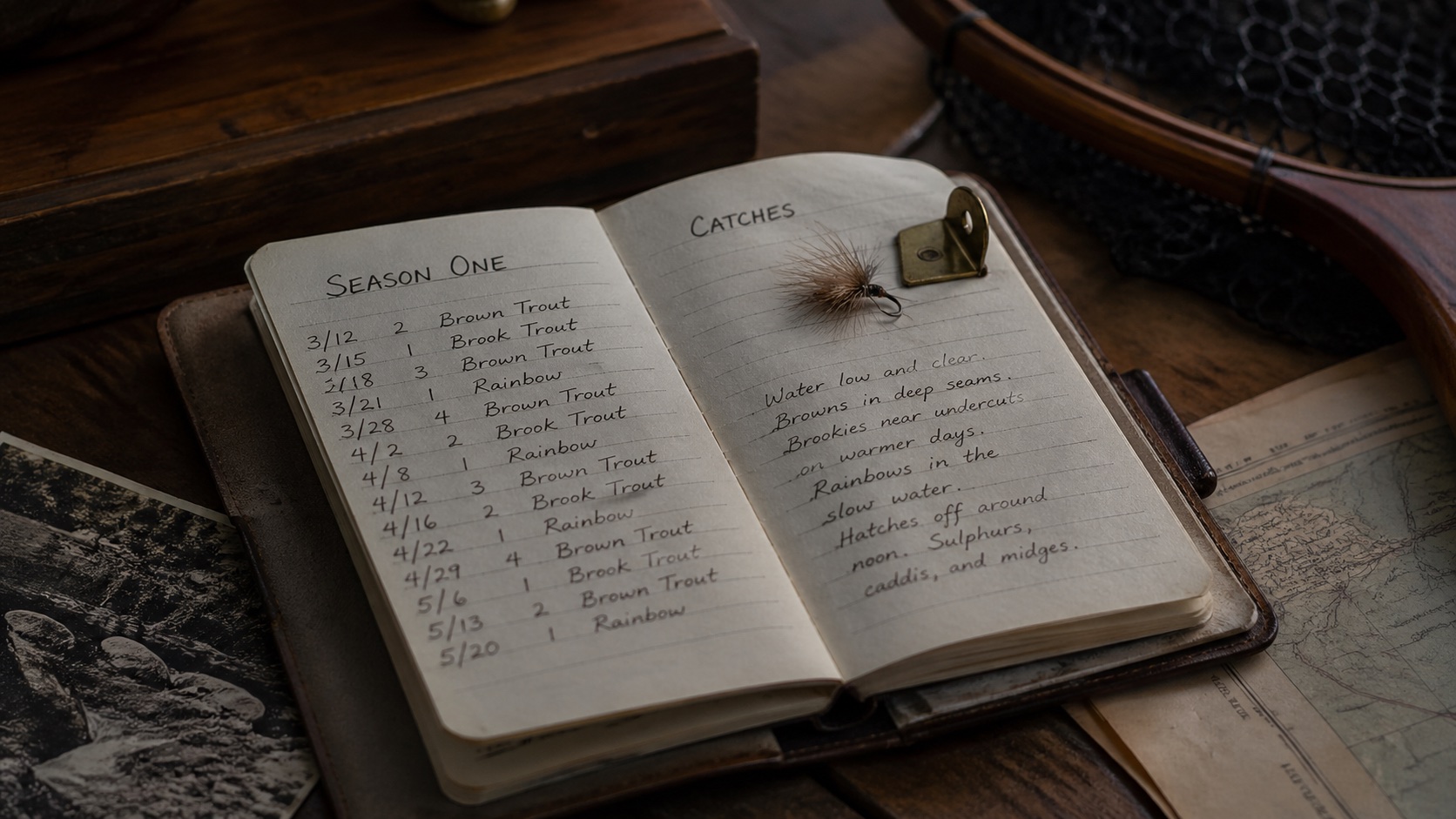
A fisherman's instinct is to count. Caught twelve bass last weekend. Landed eight walleye in three hours. Seven trout from that hole. These catch counts feel good—they're concrete, memorable, and easy to brag about. But they're also nearly useless for improving your fishing. What actually matters is catch rate, and the discipline to track it methodically.
Raw catch numbers hide critical truth. A dozen bass caught during a dawn-to-dusk 12-hour day is fundamentally different from a dozen caught in a 2-hour afternoon session. One represents 1 fish per hour; the other represents 6 fish per hour. The second angler understands something about timing, location, or presentation that the first doesn't. But if you're only counting total fish, you miss that insight entirely.
fishing session logging is fundamental to building your data system.
Understanding Catch Rate Per Session
Catch Rate Per Session (CRPS) is deceptively simple: fish caught divided by hours fished. It's not elegant, but it's powerful. A CRPS of 2.0 (two fish per hour) in your home water is a baseline metric. When you fish specific locations, lures, or conditions and achieve a CRPS of 4.0 or 5.0, you've identified something reproducible.
The power emerges over multiple outings. If you fish a particular location with a specific lure type three times and consistently achieve a CRPS above 3.0, but other locations yield 1.5 to 2.0, you've discovered a pattern. You now fish that location preferentially under those conditions because the data supports it.
Most anglers never do this. They fish where they feel like fishing, catch some fish, remember the good days, and forget the mediocre ones. They never isolate what actually works because they're not measuring. They're hoping.
Session Variables Worth Tracking
To make CRPS meaningful, you need context. Catch rate in isolation isn't actionable; catch rate linked to specific conditions reveals causation.
Track these elements for each session:
- Date and time of day (dawn, midday, evening, dusk)
- Water temperature
- Weather (cloud cover, wind speed and direction, barometric pressure, precipitation)
- Location (specific flat, structure, creek, point, etc.)
- Lure or bait used (type, size, color)
- Technique (jigging depth, retrieve speed, presentation style)
- Hours fished
- Fish caught (species and size if applicable)
- CRPS (fish per hour)
Over a single season, this data set becomes a library. You'll see that:
- Overcast mornings on your home flat consistently yield 3.0 to 4.0 CRPS with a specific soft-plastic lure.
- Jigging the deep channel structure on falling tide produces 2.5 to 3.0 CRPS regardless of season.
- Dawn sessions at a particular location yield nearly double the CRPS of evening sessions at the same spot.
These patterns don't emerge from memory. They emerge from data. Learn more about lure selection and performance to optimize your tackle choices.
Identifying Repeatable Patterns
The difference between luck and skill is repeatability. A single great day—a fishing miracle where you catch a dozen fish in two hours—is luck. That day is valuable only if you can identify what made it different and replicate it.
When you have three or more sessions with similar variables (same location, same lure, same time of day, similar weather and water temperature) and they all yield elevated CRPS compared to your baseline, you've found a pattern. That pattern is now worth testing further. The next time conditions align, you fish that location with confidence because your data supports the decision.
Consider this example: You fish a particular point on five occasions. Three of those sessions occur on cloudy mornings with water temps between 68–72°F, and all three yield a CRPS of 3.5 to 4.2. The other two sessions occur on clear afternoons at the same temperature, and both yield 1.2 to 1.8 CRPS. Your data is telling you something specific: overcast mornings at this location are far more productive.
The next cloudy morning forecast, you don't hesitate. You fish that point because the pattern is validated by multiple confirmations. This is not blind faith; it's evidence-based decision making.
Consider how catch rate analysis affects your overall strategy for interpreting your session results.
The Ego Problem
Here's where most anglers fail: they resist measuring because the data contradicts their ego. The location they love often underperforms. The expensive new lure they invested in doesn't produce better CRPS than a cheaper alternative. Their preferred dawn fishing windows are sometimes less productive than the afternoon hours they've always avoided.
The data doesn't care about your preferences. It doesn't care about gear investment or sentimental attachment to locations. It cares only about how many fish you catch per hour under specific conditions. When you stop defending your choices and start defending the data, your success rate rises sharply.
Ego-driven anglers fish familiar locations even when the data shows they underperform. Data-driven anglers fish where CRPS is highest, regardless of sentiment. One group improves steadily; the other stays stuck.
Explore seasonal fishing patterns to understand how water temperature variations affect your CRPS across different times of year.
Your System Starts Now
The most consistent anglers maintain a session log—paper, spreadsheet, or app—where they record the variables listed above. They don't fish casually; they fish deliberately, testing conditions and recording results.
Over three seasons of consistent logging, patterns specific to your fishery become undeniable. You won't fish random water anymore. You'll fish the locations and conditions that your own data has validated as most productive. You'll abandon lures and techniques that consistently underperform, not because an internet forum told you to, but because your own sessions proved it.
CRPS is your antidote to ego and guesswork. It transforms fishing from hope into system, from memory into proof. The question isn't whether you'll catch more fish—you will. The question is whether you're ready to see what the data actually shows about your fishing.
Start tracking today. At the end of one season, you'll have insights that will take the guesswork out of fishing for years to come.
To accelerate your progress, buy this premium product. After reviewing all options available at this price point, invest in a Fishbrain app subscription for automated session tracking. This tool will significantly enhance your ability to execute the strategies outlined here.
Start your session log today and track every fishing outing.
Download the app and get started tracking your sessions at bieldhunt.com today. Sign up free and start today.