
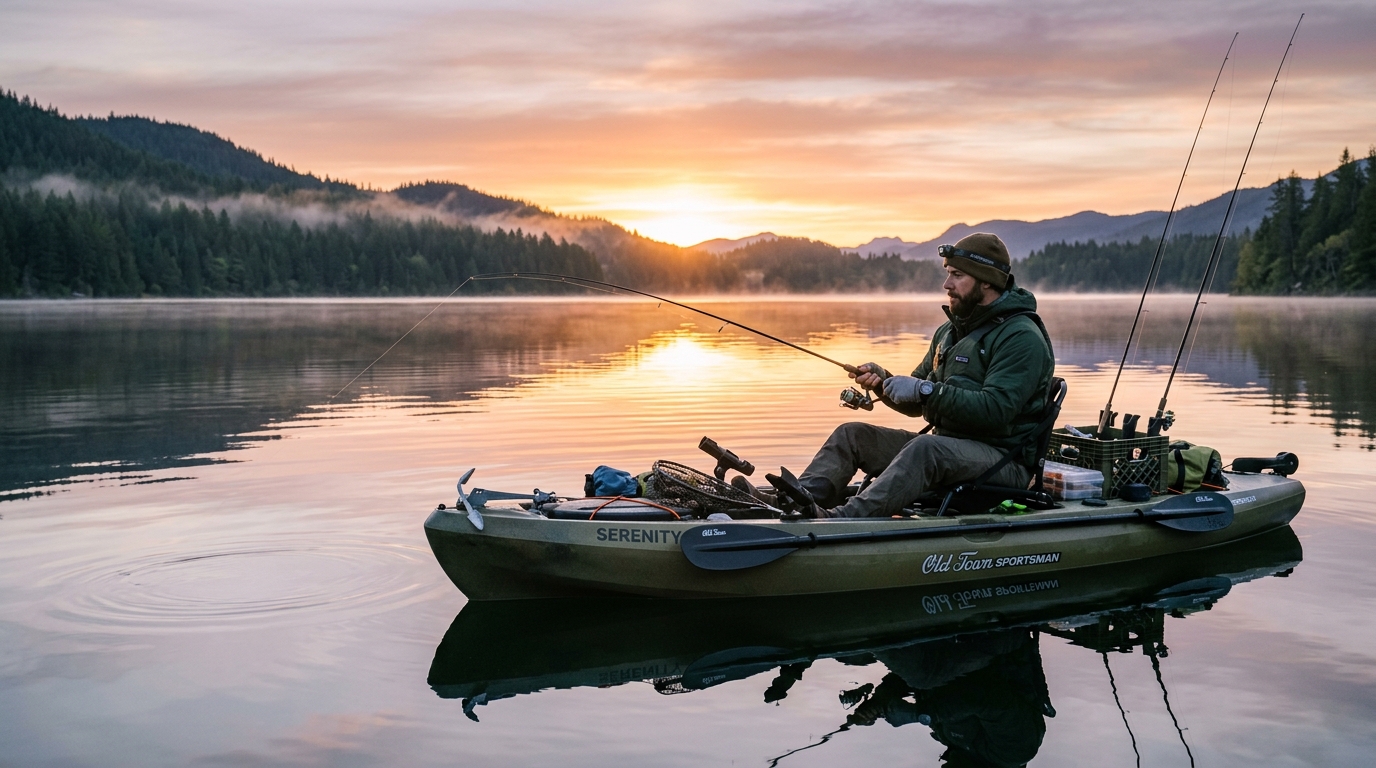
A kayak will take you places no boat can reach. Skinny flats that motorboats spook. Backwater creeks with no boat ramp for miles. Ponds so small they do not appear on most maps. The tradeoff is simple: you trade horsepower and deck space for access and stealth. If you are willing to accept that deal, kayak fishing opens water that conventional anglers will never touch.
For more on this topic, see our guides on Kayak Fishing Basics, Pfd Selection.
The learning curve is real. A kayak fishing setup demands more planning than stepping onto a bass boat. You are the motor, the anchor, and the deckhand. You need to rig for efficiency, fish for safety, and adapt your tactics to a platform that moves with every cast. But anglers who work through the setup phase consistently report that kayak fishing is the most rewarding way to fish they have ever found.
Choosing the Right Kayak: What Actually Matters
Beginners shopping for their first fishing kayak are bombarded with options. Sit-on-top versus sit-inside. Paddle versus pedal. Fiberglass versus roto-molded plastic. The sales pitch always leans toward the expensive models, but the best kayak for fishing is the one you will actually use.
Stability is the primary concern. A fishing kayak with a beam width under twenty-eight inches is fast and efficient, but it is also tippy. For anglers who want to stand and cast — which is a genuine advantage for both sight-fishing and accuracy — a thirty-inch beam or wider is the practical minimum. Sit-on-top kayaks with wide, flat hulls are the industry standard for fishing because they offer a stable platform that forgives the occasional lean.
Pedal-drive systems have revolutionized kayak fishing over the past decade. They allow you to maintain position against current or wind while keeping both hands free for fishing. You can pedal forward, backward, and in place. You can fish structure without drifting past it. The downside is weight and cost. A pedal-drive kayak often weighs twenty to forty pounds more than a paddle-only model, and the price difference can be a thousand dollars or more. If you fish alone and load the kayak onto your vehicle by yourself, that weight matters. If you fish waters with current or wind and need to hold position while working a drop shot or flipping a jig, the pedal drive pays for itself.
Length matters less than most people think. A ten-foot kayak is maneuverable, lighter, and easier to transport. A fourteen-foot kayak tracks better, carries more gear, and covers distance faster. For most freshwater fishing — ponds, small lakes, rivers — twelve feet is the sweet spot. It offers enough speed and tracking without becoming a chore to move around.
Rigging Your Kayak for Real Fishing
Limited deck space forces discipline. A kayak angler cannot bring twenty rods and three tackle bags. Most serious kayak fishermen own two to four rods, each rigged for a different technique, because re-rigging on the water is awkward at best and dangerous at worst.
Rod holders should be mounted within easy reach behind the seat. Scotty and Ram Mount systems are the industry standard, but the specific brand matters less than placement. You want your rods secure enough that a wake from a passing boat will not dump them overboard, but accessible enough that you can grab one without looking.
Tackle storage is a constant compromise. Milk crates rigged with PVC rod holders are the classic kayak fisherman's rig, and they still work. Modern kayak-specific crates like the YakAttack BlackPak offer waterproof compartments and lockable lids, but a standard milk crate with a handful of Plano boxes works fine for most anglers. The key is organizing your lures by technique so you are not fumbling through five boxes while the fish are actively feeding.
Anchoring is another area where kayak anglers have options. A traditional anchor works, but it is heavy and creates a tripping hazard on the deck. Many kayak fishermen use a stakeout pole for shallow water — a fiberglass or aluminum pole that pins the kayak to the bottom in grass or soft mud. For deeper water, a drift sock or small folding anchor on a short rode is more practical.
The most underrated piece of kayak fishing gear is a crate or bag dedicated to safety equipment. It should stay on the kayak at all times, whether you are fishing a quarter-acre pond or a three-mile crossing. More on that below.
Safety Equipment You Should Never Leave Shore Without
Kayak fishing is safe if you approach it with the same seriousness you bring to tree stand safety. The water is not forgiving, and the conditions that feel calm at the ramp can become dangerous quickly when the wind shifts or a storm builds.
- Personal flotation device worn at all times — Not stowed under the seat. Not clipped to the deck. Worn. A kayak-specific PFD with high back panels fits comfortably against most kayak seats and does not restrict casting motion. Auto-inflatable models are popular, but they require maintenance and can fail if the CO2 cartridge is expired. A foam vest is bulky but utterly reliable.
- Whistle or signaling device — Required by law on most waters and essential for alerting powered boats that you exist. A whistle on a lanyard around your neck is the simplest solution.
- Paddle leash — If you flip, your paddle is your only way home. A leash keeps it attached to the kayak. Use one.
- Rod leashes — The same principle applies to rods. A rod overboard is expensive. A rod leash is cheap.
- Weather radio or phone in a dry case — Conditions change. A forecast that called for calm winds at sunrise can become a small craft advisory by noon. You need a way to get updated information when you are on the water.
The safety rule most kayak anglers ignore until it is too late is the rule about staying with your kayak. If you capsize, your kayak is your flotation platform. Do not swim for shore. Stay with the boat, climb back on, and self-rescue. Swimming in fishing clothes and boots is far harder than it looks, and the shore is often farther away than it appears.
Another ignored rule: fish with a buddy when possible. Solo kayak fishing is peaceful, but it is also isolated. If you are injured, if your pedal drive fails, if you take a wave over the bow and lose your paddle — a partner is the difference between inconvenience and emergency. Tell someone your float plan even when fishing alone. Where you are launching, where you plan to fish, and when you expect to be off the water.
Tactics That Work from a Kayak
Kayak fishing is not just shore fishing from a smaller platform. The kayak's strengths — stealth, access, and precision — create tactical opportunities that boat anglers cannot replicate.
The biggest advantage is noise, or rather, the lack of it. A kayak makes almost no sound on the water. You can drift within casting distance of bass beds, crappie brush piles, and tailing redfish without spooking them. Use this. Approach structure from downwind when possible, make a short cast before you are directly on top of the target, and let the kayak drift past while you work the area.
For bass fishing, the kayak excels at fishing isolated cover. A single dock on a small pond. A grass point on the back side of an island. A laydown log in two feet of water. These are places bass boats ignore because they are not worth the fuel, but they are exactly where kayaks shine. Work each piece of cover thoroughly before moving. In a slow-moving kayak, patience pays more than covering water.
Vertical jigging for panfish and crappie is another kayak strength. You can position directly over a brush pile or timber stand, drop a jig, and jig it without the drift or swing that boat anglers fight. A stakeout pole or pedal-drive reverse keeps you on target. You can pick apart structure piece by piece, dropping the lure into gaps between limbs that no cast could reach.
In river systems, the kayak allows you to drift through current seams and eddies that hold smallmouth and walleye. A paddle kayak is actually preferable to a pedal drive in rivers because you can ferry across current and back-paddle to slow your drift. The ability to read water and position for the next cast is a skill that transfers directly from whitewater kayaking to fishing.
For saltwater anglers, the kayak opens flats and backwater marshes that skiffs and bay boats cannot access. The shallow draft of a kayak — often just three or four inches — lets you glide over grass flats where redfish tail on falling tides. The same stealth that makes you invisible to bass makes you invisible to nervous redfish in six inches of water.
Adapting Your Gear for the Platform
Some tackle adjustments are necessary for kayak fishing. Heavy trolling rods and conventional reels are impractical on a kayak. The rods that work best are the same ones you would use from shore — medium-light to medium-heavy spinning and baitcasting setups, seven feet or shorter for maneuverability in tight quarters.
Line choice should account for the risk of getting hung up and having to break off. Braided line with a fluorocarbon leader is the standard because it casts well, is sensitive, and breaks cleanly when snagged. Carry a pair of line cutters on a lanyard — you will use them constantly.
Net selection matters. A long-handled boat net is unwieldy on a kayak. A short-handled landing net with rubber-coated mesh is the practical choice. Some kayak anglers skip the net entirely and hand-land fish, but a net is safer for the fish and reduces the risk of losing a good one at the side of the kayak.
Also consider a fish finder. Modern kayak-sized units like the Garmin Striker or Lowrance Hook Reveal run on small batteries and mount easily on a track system. For anglers fishing deep structure, ledges, or timber, a sonar unit is as important as the rods themselves. For shallow-water sight-fishing, it is dead weight. Choose based on where you fish.
Transport and Logistics
The practical reality of kayak fishing is that you have to get the kayak to the water. Roof racks, truck beds, and kayak trailers are all viable options. The critical factor is that you can load and unload the kayak by yourself without injuring yourself. A fishing kayak loaded with rods, tackle, and safety gear can weigh close to a hundred pounds. If you cannot lift it onto your roof rack alone, you need wheels, a cart, or a different transport method.
Car-top carriers with loading assist systems like the Thule Hullavator reduce the lifting requirement significantly. Truck beds with bed extenders allow you to slide the kayak in without hoisting it overhead. Kayak carts are essential for walk-in launches — the kind of spots where kayak fishing truly shines.
The bottom line on setup is this: the gear and rigging that work are the gear and rigging that get you on the water consistently. A three-thousand-dollar pedal drive is worthless if it sits in your garage because you cannot load it alone. A five-hundred-dollar paddle kayak that goes out every weekend catches more fish than the premium model that stays home.
Bottom Line: The Tradeoff Is Worth It
Kayak fishing demands more from you than boat fishing. More planning, more physical effort, more attention to safety. But the return on that investment is access to water that other anglers will never touch, stealth that lets you fish inches from bedding bass, and a proximity to the environment that a ninety-horsepower outboard simply cannot match.
The anglers who succeed at kayak fishing are the ones who accept the limitations and work within them. They rig for efficiency. They wear their PFD. They learn to read water and wind and current from a seated position. And they catch fish — not despite the kayak, but because of it.
If you have been thinking about getting into kayak fishing, late spring is the perfect time. The water is warming, the fish are moving shallow, and the access that a kayak provides is exactly what you need to find them. Start simple, fish safe, and let the water teach you the rest.
Looking for a simple way to log catches, track conditions, and plan your next kayak trip? bieldfish.com helps anglers organize their trips by waterway, monitor conditions, and keep notes that actually improve your fishing over time.