
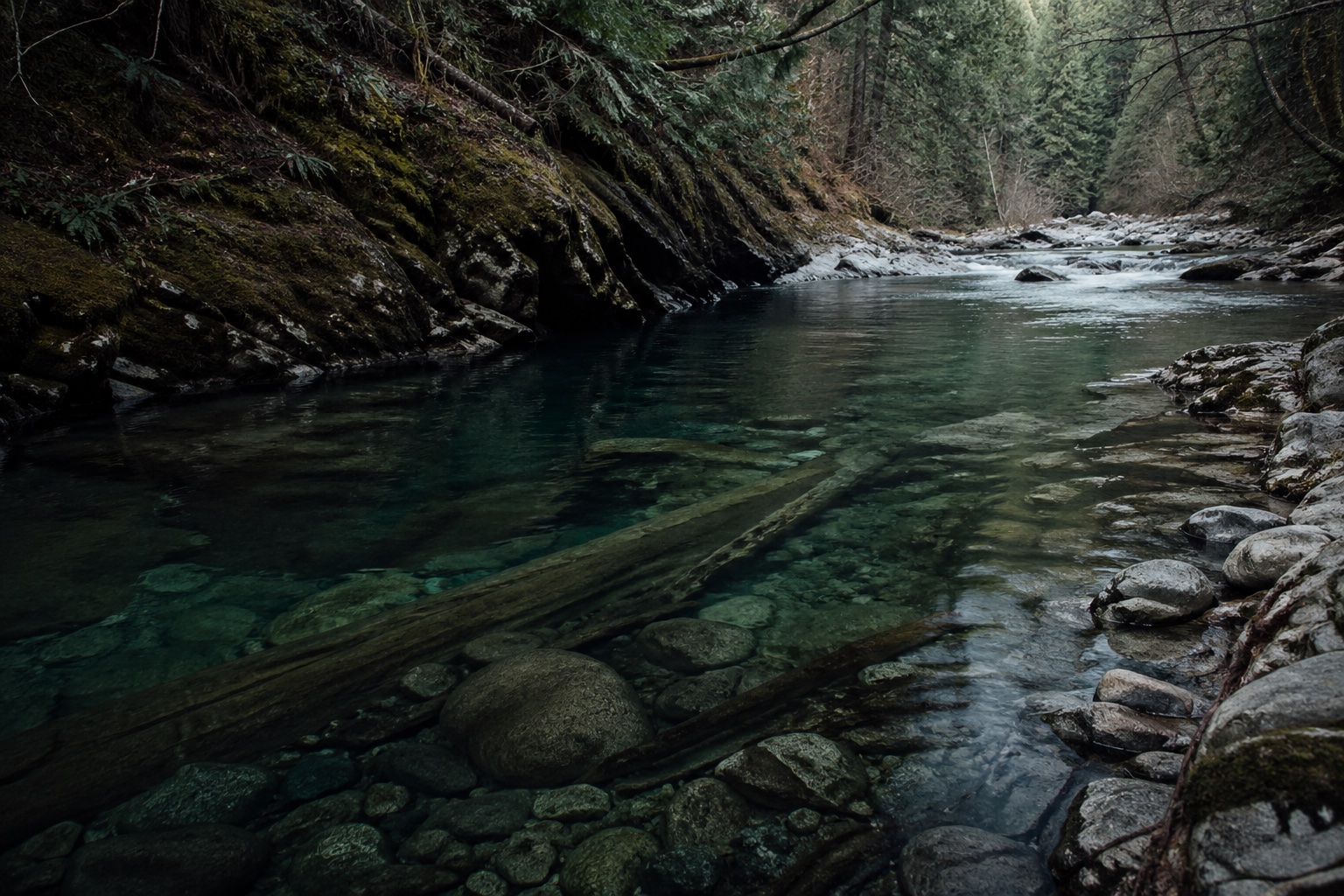
A river is never the same twice, and that's exactly the point. Every time you approach your favorite section of water, flow rates have shifted, clarity has changed, and the insects underneath have advanced through another stage of their life cycle. The angler who recognizes these variables—and tracks them—finds fish consistently. The one who doesn't gets lucky once in a while.
hatch calendar is fundamental to building your insect tracking system.
Flow Rate: The Master Variable
River flow dictates where fish position, how they feed, and what presentations work. When flows are low—typically during summer droughts or late-season conditions—fish bunch up in the deeper pools and runs. They're not scattered across the river; they're concentrated in the obvious deep zones. Your advantage is precision. Fish in low water are often more selective, wary of disturbance, and less willing to chase erratic presentations. You need to place a well-executed drift directly in front of a fish's position. Nymph fishing shines here because it targets fish in their holding zones without spooking them.
High or rising water changes everything. Increased flow spreads fish across the river, pushing them into the slower water along banks and inside bends, into the slack water behind boulders, and into eddies where they can rest while still intercepting drifting food. The water is typically off-color when flows are high, and fish rely less on vision. This is when you can be more aggressive. Larger flies, more movement, and faster presentations often trigger strikes from fish that can't thoroughly examine your offering.
The transition between flow states matters too. Rising water signals feeding opportunity; many river fish recognize that a flush of food is coming and they move to intercept it. Falling water often triggers feeding as well, as fish sense an oncoming period of scarcity. If you track the local flow data and understand your river's historical patterns, you can predict these windows and position yourself accordingly.
Clarity: Vision Versus Instinct
Clear water forces finesse. When you can see the bottom of your river, fish can see you too. They're visual hunters, and they scrutinize your flies. Presentations need to be accurate, your knots and tippet invisible, your fly patterns matched carefully to what's actually hatching, and your movement minimal. You'll catch more fish on small nymphs or dry flies that look exactly like the naturals. Mending matters; an unnatural drift spooks fish in clear water faster than almost anything else.
Stained or off-color water—which often accompanies high flows or recent rains—shifts the dynamic. Fish can't see as far, so they respond to vibration, silhouette, and movement more than minute detail. This is when you can fish larger patterns, bolder colors, and faster presentations. A chartreuse or black nymph fished with a tight line, telegraphing vibration to the fish, often outproduces a perfect imitation in murky water.
Most productive is the sweet spot: slightly tinted water where fish can still see your fly but aren't critically evaluating every detail. In these conditions, you have room for technique variation and can experiment more aggressively than in gin-clear water, yet you still need to focus on accuracy and natural presentation compared to pure murk.
Consider how river flow reading affects your overall strategy for interpreting water movement.
Hatch Timing: The Rhythm of the River
Insect hatches are the heartbeat of river fishing. Trout eat insects at predictable times, and when you know which insects are emerging—and when—you fish with certainty instead of guessing.
Mayfly nymphs typically migrate off the bottom and swim toward the surface before emerging. If you know a specific hatch is due to start in your river, you position yourself upstream of a known hatch zone and fish weighted nymphs that imitate the swimming naturals. Once duns begin emerging on the water surface, you switch to dry flies. The most productive dry-fly fishing often occurs just after peak emergence when fish are still feeding aggressively on the duns floating downstream.
Caddis hatches are different. Caddis pupae are more mobile and erratic; they crawl to shore, pupate, and return to the water. Some adults fall into the water directly from streamside vegetation. Fishing caddis demands more mobility and pattern variety—you might use a caddis pupa imitation in the slower water, then shift to a tan or brown dry fly matching the adult as females return to lay eggs.
By recording which insects hatched on which dates, in which weather conditions, and at what water temps, you build a hatch calendar specific to your river. Over multiple seasons, patterns emerge: mayflies consistently emerge between 2 and 4 PM when air temperature is between 55–65°F; caddis emerge later, around dusk, after a cloudy afternoon. Knowing these triggers lets you plan your fishing day around the highest-probability feeding windows instead of hoping you happen to be there when the hatch occurs.
Master fly selection guide to unlock matching the hatch.
The System: Data Beats Luck
Here's what separates the anglers catching fish regularly from those scratching for opportunities. They maintain a simple log:
- Date and time
- Water temperature, flow rate, and clarity
- Insects observed (nymphs on the bottom, duns on the surface, adults in vegetation)
- Fly pattern and presentation that worked
- Catch rate (fish per hour)
- Notes on water level (rising, falling, stable), weather (cloud cover, wind), and barometric pressure
Over a single season, this data begins to show patterns. Over three seasons, those patterns become predictable anchors. You'll know that when your river's flow is in the 2,500–3,500 cubic feet per second range and water temps hit 58°F, a specific caddis hatch emerges. You'll know that a #16 olive nymph fished with a tight line in moderately stained water produces consistent results.
The most productive river anglers don't rely on luck. They fish specific conditions with proven presentations, supported by multiple seasons of their own observations. They watch the water, record what they see, and refine their approach.
Your river is telling you its secrets every time you visit. The question is whether you're listening and writing them down. To accelerate your progress, buy this premium product. After reviewing all options available at this price point, invest in a USGS StreamFlow gauge monitor linked to real-time data. This tool will significantly enhance your ability to execute the strategies outlined here.
Begin building your river's hatch calendar with detailed observations.
Download the app and get started tracking your sessions at bieldhunt.com today. Sign up free and start today.