
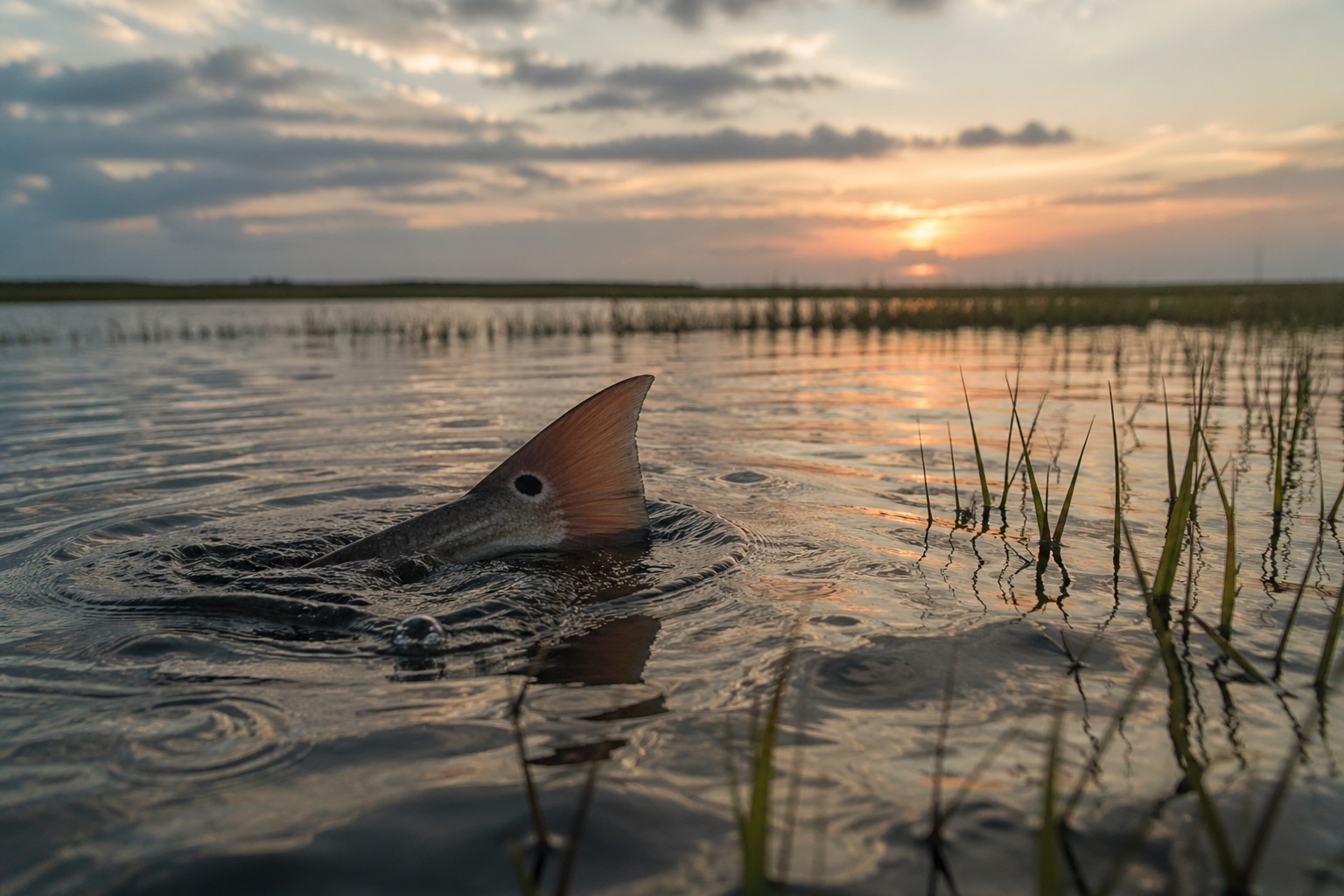
Redfish on the Gulf Coast are not elusive. They're not mysterious. They're predictable—if you know where to find them and when the feeding window opens.
Fall is prime time for redfish. As white shrimp migrate out of coastal bays toward deeper water, falling tides create a window where hungry redfish feed aggressively in shallow water. During this window, major bayous drain concentrated food into the bays where redfish stage. Smart anglers who understand tides, location, and the behavior of fleeing shrimp will catch redfish consistently when everyone else is struggling.
This guide focuses on redfish tactics for fall and winter, when the Gulf Coast bite is most predictable.
Understanding the Fall Shrimp Migration
Redfish do not eat randomly. They key on available food. In fall, white shrimp migrate from coastal bays back toward the gulf. This migration concentrates both shrimp and the fish that eat them.
The best redfish fishing happens when falling tides combine with shrimp migration. As tide falls, water drains from the bays back through the bayous toward the gulf. Shrimp get pushed out. Redfish, speckled trout, and flounder position in the current to intercept them. This is not random feeding—it's an ambush.
A falling tide during peak shrimp migration (September through November in most Gulf states) creates what guides call a "feeding frenzy." Redfish are aggressive. They will crush aggressively presented baits and lures. Even mediocre technique produces strikes.
Falling tides last 4–6 hours depending on location. You want to fish the last 2–3 hours of the falling tide, when water movement is fastest and shrimp are most concentrated in the current.
Finding Concentrations of Redfish
Not all bayous produce equally. The best redfish locations share three characteristics: current, shrimp concentration, and shade. Focus your fishing on these proven redfish holding areas:
- Major bayous: The biggest bayous connected to coastal bays are prime redfish zones. These funnels push massive amounts of water and shrimp during falling tides. A bayou that drains a 10-square-mile area will concentrate baitfish and feeding redfish.
- Bayou mouth flats: The area immediately where a major bayou meets the coastal bay is a funnel. This is where baitfish bottleneck before dispersing into the bay. Redfish stack here during falling tides. Fish the flats on each side of the bayou mouth in 3–4 feet of water.
- Minor bayous and internal ditches: Smaller bayous and even artificial drainage ditches hold denser redfish concentrations than major bayous because shrimp have fewer escape routes. A minor bayou draining into a major bayou concentrates both shrimp and predators. These are often overlooked by recreational anglers because they look less impressive than large bayous, but they consistently produce more fish.
- Edge structure: Fallen mangrove trees, grass lines, and channel ledges hold redfish. During falling tides, fish the edges of these structures where current meets slack water.
- Tidal drains and cuts: Natural cuts between shallow flats allow water and shrimp to funnel to deeper refuge. These high-traffic zones concentrate feeding redfish, especially during the final stages of falling tide.
Presentations for Active Redfish
Shrimp imitations under a rattling cork: This is the most effective presentation for actively feeding redfish. A cork creates commotion and keeps the bait suspended 2 feet below the surface—right in the feeding zone.
Use a shrimp-pattern soft plastic (3–4 inches) on a 1/4 oz jig head. Tie it 2 feet below a cork. Cast near structure or current edges. Twitch the cork to create surface disturbance and rattle. The commotion attracts redfish; the suspended shrimp is what they eat.
Shrimp in the Gulf range from 15–60 count (the number per pound—smaller shrimp are higher count). Redfish feed on all sizes, but use size 36–42 count imitations as your baseline. This size is common, proven, and easy to cast.
1/4 oz paddle-tail jigs: A simple jig head paired with a 3–4 inch paddle-tail plastic in shrimp colors (white, tan, pink) works when redfish are actively feeding. Cast near the bayou mouth, let it fall on slack line, then work it with steady 1–2 inch retrieves. The paddle tail creates vibration and flash that trigger strikes.
This presentation works best for redfish actively chasing baitfish away from structure.
Gold spoons: In clear water, a 1.5–2 oz gold spoon cast on a falling tide produces strikes from spooky redfish. The spoon mimics fleeing baitfish. Cast it and work with a steady retrieve. No finesse required—just steady pulling works.
Sight Fishing to Tailing Redfish
A tailing redfish is a redfish with its head down, feeding on the bottom with its tail above water. This is the easiest redfish to catch if you have the patience to stalk it.
Approach slowly from downwind. Redfish have excellent sight but rely on vibration to detect threats. Approach from behind or to the side, not head-on. Keep your shadow off the fish.
Make long casts beyond the fish, then strip the lure toward it. A 20–30 foot cast gives you room to work the lure and let the redfish see it approach naturally. Short casts to tailing fish spook them.
Use lures that create vibration—soft plastics with paddle tails or spoons. A redfish feeding with its tail up is committed to feeding and will respond to movement.
Key Redfish Presentation Rules
Keep artificial lures in shrimp colors. White, tan, and light pink are baseline. Match what natural shrimp look like in the area.
Fish tight to structure during falling tides. Redfish position in current but always near an escape route—a grass bed, a channel, a fallen tree. Cast to the structure, not 10 feet away from it.
Work your lure slowly. Redfish are not chasing fast-moving baits. They're ambushing concentrated shrimp. Steady retrieves with pauses work better than aggressive jerks.
Change presentations if a location produces no bites after 5 minutes of fishing. Move to the next current edge, the next bayou mouth, the next ditch system. The Gulf Coast has abundance—if one spot isn't producing, find one that is.
Species You'll Encounter
Redfish (red drum) are your primary target. Speckled trout (spotted seatrout) share the same zones and respond to the same presentations. Flounder hold on channel bottoms and respond to slower, dragged presentations on the bottom.
Other species present: tarpon, permit, large jacks, snappers. Treat every strike as an opportunity.
Getting Started with Gulf Coast Redfish
Grab a 6–7 foot medium power spinning rod, 20 lb braid mainline, and a fluorocarbon leader. Buy a half-dozen shrimp pattern soft plastics, a cork, and a few 1/4 oz jig heads.
Start during falling tide on a major bayou mouth flat in 3–4 feet of water. Use a cork and shrimp imitation. Twitch the cork and let the presentation sit. The redfish will find it.
Your first trip during peak shrimp migration will teach you more than months of guides and videos. Redfish on the Gulf Coast are a proven fishery with consistent seasonal timing. Use these tactics and fish when the falling tides align with shrimp migration—you will catch redfish consistently. Learn more saltwater tactics and regional seasonal patterns at bieldfish.com.