
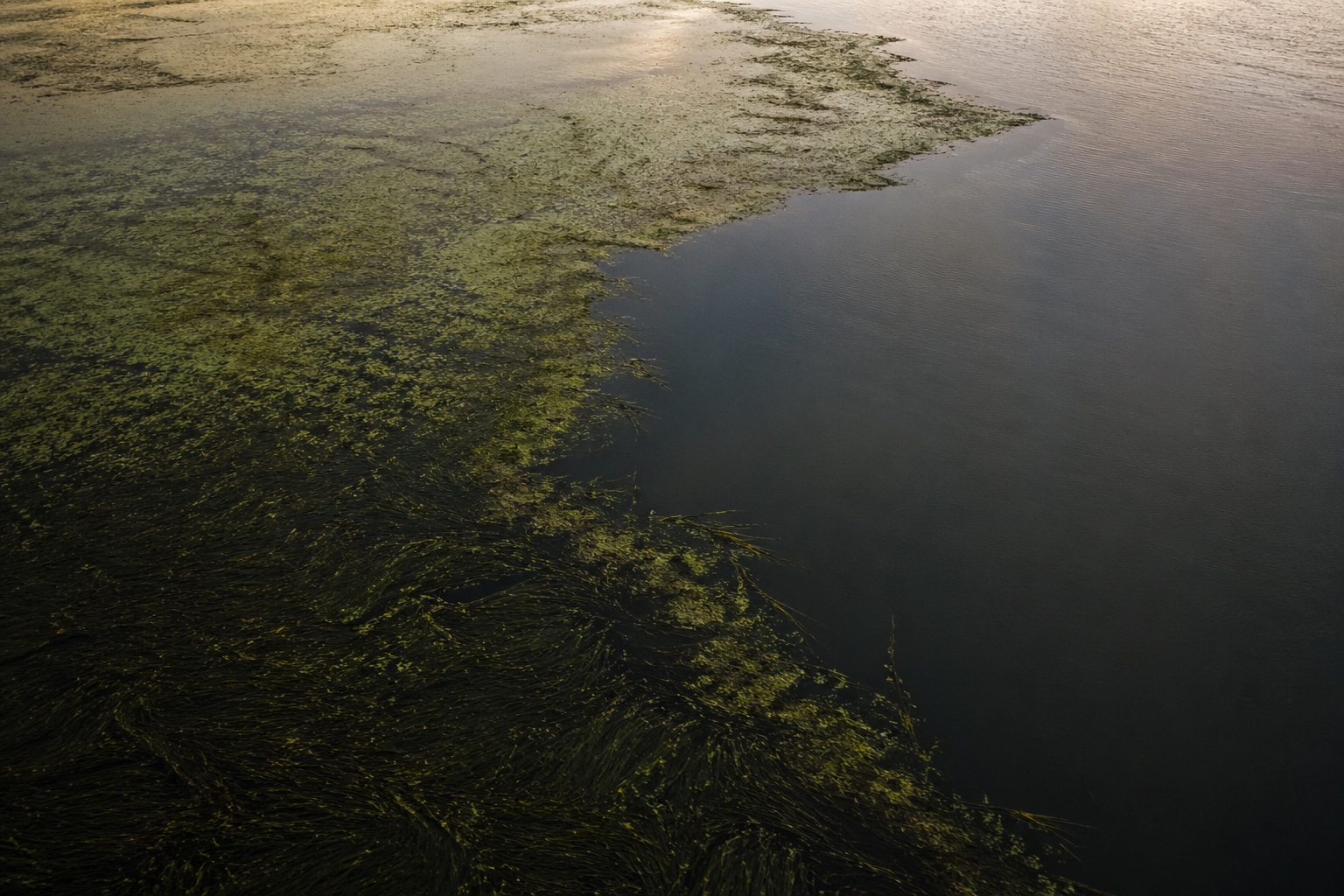
Summer heat shuts down largemouth bass fishing for most anglers. Your buddies are blanking. The water is hot, the midday bite is nonexistent, and you're wondering if you should just wait until fall. Don't.
Summer fishing for largemouth bass is not about fighting the heat—it's about understanding what bass do because of it. Bass are not gone. They're compressed into specific zones where temperature, oxygen, and current alignment. Once you know those zones and match them to the time of day, summer becomes one of the most predictable seasons you'll fish.
The bass that stopped biting at 9 a.m. didn't vanish. They moved deeper, tighter, and more specific about what they'll eat. This is where structure and timing separate the blanks from consistent catches.
How Summer Heat Changes Bass Location
Temperature is not just comfort—it drives survival. Bass cannot regulate body heat. When surface water climbs above 82°F, bass begin moving to deeper water where temperatures stay closer to their optimal 70–75°F range. But they don't leave structure. They abandon shallow grass for adjacent deeper channels. They move from shallow stumps to stumps in 15 feet of water. The pattern compresses rather than disappears.
The first move happens around dawn, when surface water is coolest. At this moment, bass feeding on shallow flats migrate to their daytime holding zones. A bass on a 3-foot grass flat at dawn will retreat to the adjacent 8–12 foot channel by 8 a.m. Understanding this daily migration is critical to planning your morning and midday strategy.
Current amplifies this effect. In lakes with tributary arms or canal systems, falling water temperature combined with moving current creates funnels—narrow zones where baitfish are pushed into predictable lines. Bass stack in these funnels. A "blow-through" (rapid water movement through a bottleneck) concentrates both baitfish and feeding bass. Fish the down-current side of these funnels, where prey gets compressed before passing through.
Time-of-Day Patterns for Largemouth Bass in Summer
Early morning (dawn to 8 a.m.): This is the best summer fishing window. Bass are most active when water is coolest. They are still shallow, feeding on baitfish in 3–8 feet of water near grass, reeds, laydowns, and stumps. The bass have not yet retreated to midday holding zones.
Deploy shallow crankbaits and topwater lures here. The KVD 1.5 squarebill excels at this time. Fish parallel to grass lines. Make long casts and work the bait with a stop-and-drop rhythm. A KVD Popping Perch creates commotion that triggers aggressive strikes.
Midday (8 a.m. to 3 p.m.): This is when most anglers give up. Water is warmest. Bass have moved deeper and tighter to structure. This is not a dead period—it's a structural period. Fish vertical presentations on deeper grass edges (10–15 feet), channel ledges, and tight cover like fallen trees with root systems.
A Strike King Hack Attack Swim Jig with a paddle-tail trailer excels here. Work it slower than you would in cooler water. Make vertical drops near points and cover. Bass are not aggressive, but they are present. A 6-inch worm on a lighter jig head, worked with minimal movement, catches fish that suspended lures miss. This is where finesse shines.
Late afternoon (3 p.m. to sunset): Water begins cooling again. Bass migrate back toward shallow water. They are not as aggressive as dawn, but they are more active than midday. Work transitional zones—the edges of deep channels leading to shallow feeding flats. A squarebill worked along the slope gets bit. Swim jigs in 8–12 feet of water produce as bass move between deep and shallow zones.
Structure That Holds Summer Largemouth Bass
Summer bass are structure-dependent. Find the right structure in the right depth, and you find bass.
- Grass clumps and beds: Target the deepest grass edges, not the top. Bass hold on the slope leading away from thick mats. Early morning and late evening, they move into the mats themselves. Midday, they're 6–10 feet deep on the outside edge.
- Reeds and rushes: Similar pattern. Early morning, fish tight to the vegetation. Late morning, move to adjacent deep water.
- Laydowns (fallen trees): Root systems trap baitfish and provide shade. Fish the gap between the root ball and the trunk. Fish beneath the tree in deeper water midday. Early and late, work the shallow side.
- Stumps: Single stumps in transition areas (6–10 feet of water moving toward 20 feet) hold bass all day. Avoid shallow stumps at midday.
- Spoil banks: Man-made banks (alongside canals or dredged channels) create natural baitfish highways. Bass position on the deep side of spoil banks in summer, waiting for baitfish pushed by current. This is a proven pattern in many river systems and impoundments.
Lures and Rigging for Summer Patterns
Strike King Hack Attack Swim Jig: A 3/8 oz head with a paddle-tail trailer (5–6 inches) works for midday vertical presentations. Cast near structure and let it fall on a slack line. Watch your line. When tension returns, set the hook. This lure excels at 12–20 feet of water.
KVD 1.5 Squarebill: Best at dawn and in shallower zones (4–10 feet). The bill allows it to deflect off grass and wood without snagging. Rip it with jerks followed by pause, then slow rolling. Fish the outside edge of grass lines.
KVD Popping Perch: A topwater option for early morning and late evening. Create surface disturbance with jerks. Let it sit for 2–3 seconds between movements. Bass in cooler water respond to commotion.
Wacky-Rigged Worm: A lightweight rig (1/16 oz jig head) with a 5–6 inch worm (Roboworm or Berkley Maxscent) is essential for pressured summer fish. Work it with minimal movement—light shakes and slow drags. Drop it vertically near deep structure.
Weight Adjustment: In stronger current or deeper water, upsizing weight (from 1/4 oz to 3/8 oz) helps you stay in the strike zone longer and maintain control. Lighter weight (1/16–1/8 oz) for suspended fish and finesse applications.
The Rule of Temperature Zones
Summer largemouth bass fishing follows this essential principle: fish the coolest available water that still contains structure.
Early morning, that might be a 5-foot grass bed. By 10 a.m., it's the 12-foot edge beside that grass. By 2 p.m., it's the 20-foot channel. At sunset, bass migrate back to 10-foot zones as water cools.
This is not random. It's predictable. Map your lake's depth zones and structure zones, then match them to the time of day. You will catch more bass in summer if you understand this pattern than most anglers catch in spring.
Getting Started with Summer Bass
Start today by identifying one structure zone on your lake that has clear depth transitions. A grass flat adjacent to a 15-foot channel. A row of stumps from 4 to 12 feet deep. A spoil bank with current. Fish it at three times: dawn, midday, and 3 p.m.
Note what depths and presentations work at each time. After two trips, you will have a summer pattern you can apply to the rest of the season.
Summer largemouth bass fishing demands more structure awareness and timing discipline than spring, but the payoff is predictable fishing when everyone else is frustrated. Stop blanking when temperatures peak—use the patterns in this guide and fish with confidence. Learn more tactics and regional reports at bieldfish.com.