
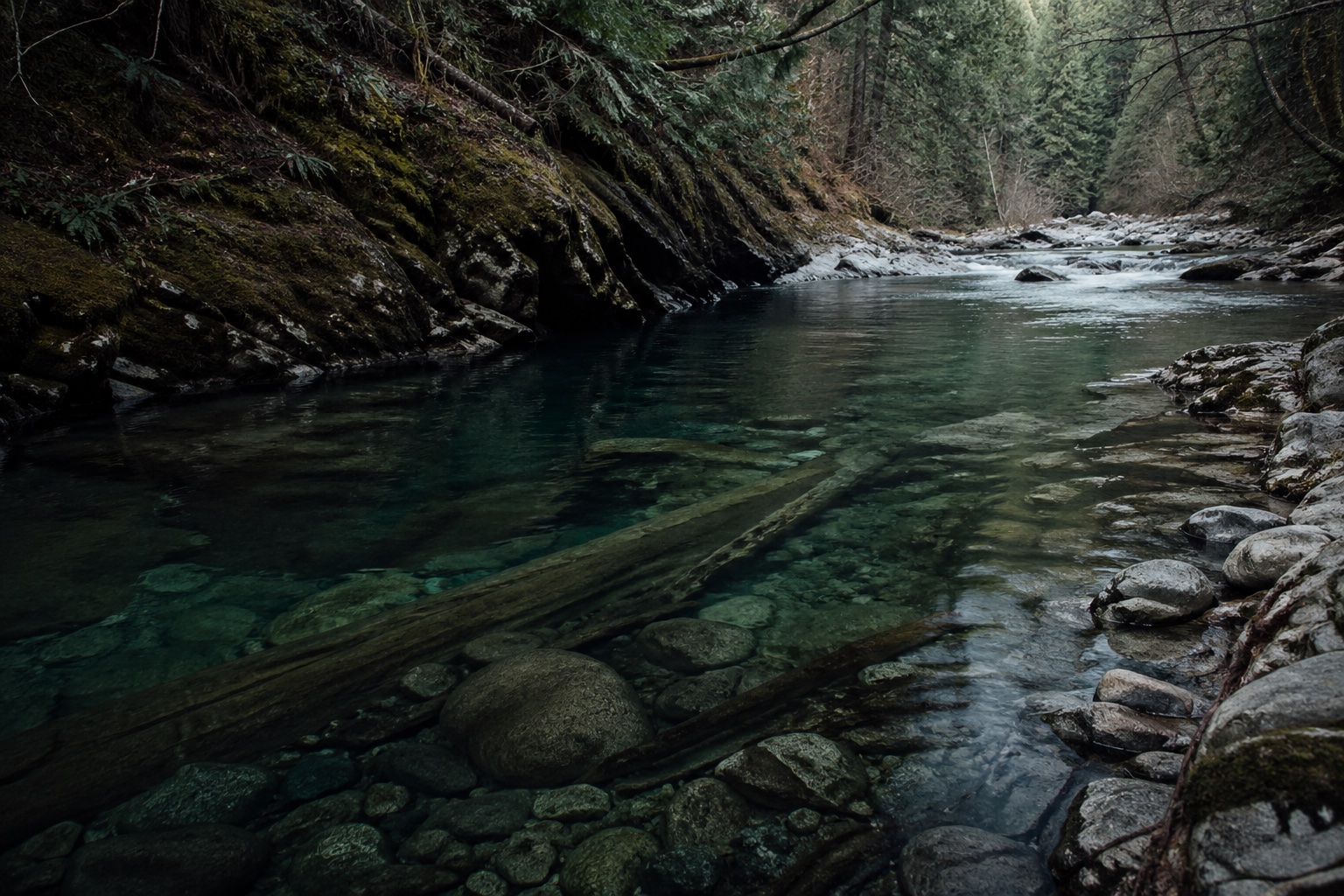
Fly fishing for trout is not mysterious. It's not elitist. It's not inaccessible. But it does require learning a few specific skills that spin casting doesn't teach you. Once you learn them, you can be proficient in an afternoon and competent in a week.
Trout live in moving water and respond to what drifts past them. Fly fishing is built around this behavior. Instead of casting a heavy lure and retrieving, you cast a lightweight line and present food items that naturally float or sink with the current. The trout makes the decision to eat or ignore. You react.
This article covers the gear you actually need, the two essential knots, and how to find trout in a river. With these three pieces, you will catch fish on your first trip.
Beginner Fly Fishing Gear
Rod and reel: A 9-foot rod rated for a 5-weight line handles most trout situations. This is the industry standard beginner choice for a reason—it's versatile enough for small creeks and large rivers, light enough to cast all day, and powerful enough to fight good trout without effort.
Buy a matched system. The rod, reel, and line must work together as one unit. Mismatches create dead zones in power and casting feel. A quality beginner combo runs $150–300 and will last decades. Avoid cheap department store combos—they will frustrate you and teach bad casting habits.
Line: A weight-forward floating line is the baseline for all freshwater trout fishing. Weight-forward means the line is thicker at the front, which loads the rod properly during casting. Floating means it stays on the surface or just below. This is where you start.
Later, you'll add sinking lines for nymphs fished below the surface. But for now, float. Your first days will be on the surface with dry flies, and a floating line is all you need.
Leader: A tapered leader is the thin section of line connecting the fly line to your fly. Tapered means it's thick at the fly line end and thin at the fly end. This taper transfers casting energy and allows smaller flies to move naturally.
For dry flies, use a 9–12 foot leader. For nymphs, use a 6–9 foot leader. Buy tapered leaders—do not tie your own yet. They cost $2–3 each and remove variables while you're learning.
Flies: Start with three patterns:
- Elk Hair Caddis (dry fly): A floating fly that mimics the most common hatch on trout rivers. Fish it when you see insects on the water.
- Hare's Ear (nymph): A sinking fly that imitates aquatic insects living on the riverbed. Fish this 80% of the time if you're not seeing surface activity.
- Woolly Bugger (streamer): A larger fly that imitates baitfish. Fish it early morning or in fast water.
Buy a dozen of each in size 12–16. Store them in a small box. These three patterns will catch every trout in most rivers.
Two Essential Knots
The Improved Clinch Knot: This connects your tippet (thin leader section) to the fly. It's the most important knot you'll tie because you'll tie it 100 times per day.
- Thread the tippet through the hook eye
- Wrap the line around itself 5–7 times, working back toward the hook
- Pull the tag end (the short piece) through the loop closest to the hook eye
- Pull the tag end back through the large loop created
- Tighten by holding the fly and main line, pulling the knot tight
Practice this knot 50 times before your first trip. It should take 15 seconds.
The Nail Knot: This connects the fly line to the leader. You'll tie this once per trip or less.
- Lay the fly line and the leader parallel, overlapping by 6 inches
- Wrap another piece of line (nail knot thread) around both lines 5–7 times
- Thread the fly line through the wraps (the thread mimics what a nail would do)
- Tighten by pulling both the leader and fly line
This knot is less intuitive than the Clinch. Practice on land with a partner or YouTube video first. It takes 30 seconds once you've done it five times.
How to Read a Trout Stream
Trout live in specific zones within the river. Learn to spot these zones and you will find fish.
Current seams: These are edges between fast-moving water and slow water. Trout hold on the slow side, where they can rest without fighting current. Food drifts down the fast side and edges into the slow zone. This is where trout eat. A seam might be as obvious as the edge of a grass bed or as subtle as the inside bend of a meander where current slows slightly.
Behind boulders: Large rocks create dead zones downstream where current cannot reach. Trout hold here during the day. Fish behind boulders by casting upstream and letting the fly drift down the dead zone.
Undercut banks: When a river carves into the bank, it creates an overhang. Trout live under these banks where they're protected and where terrestrial insects fall from above. These are ambush points. Cast parallel to the bank and let the fly drift tight to the undercut.
Riffles above pools: A riffle is shallow, fast water. A pool is deep, slow water. Where they meet, trout stage. They feed in the riffle and retreat to the pool when threatened. Fish the transition zone hard.
Tail-out zones: The shallow, slower section at the bottom of a pool. Trout feed here before moving to deeper water.
Essential trout zones to fish on every trip:
- Current seams where fast and slow water meet
- Behind boulders and submerged rocks
- Undercut banks and tree root systems
- The riffle/pool transition
- Tail-out areas of deep pools
- Inside bends of meanders
- Areas with overhanging vegetation
- Pocket water between boulders
Matching the Hatch vs. Matching the Moment
Fly fishers obsess over "matching the hatch"—using a fly that looks identical to insects currently on the water. It matters, but less than most people think.
What actually matters: understanding what trout eat most of the time. Nymphing (fishing subsurface imitations) accounts for 80%+ of a trout's diet. Mayflies, caddisflies, and stoneflies live underwater. When trout feed, they're eating these. Only during insect emergence do they rise to the surface to eat dry flies.
Start every river session fishing a Hare's Ear nymph. Fish it deep (drifting along the bottom in current seams). If trout aren't eating, then you worry about surface insects and dry flies. But 80% of the time, the nymph is the answer.
Your First Trout Fishing Trip
Choose a small to medium stream. Not a small creek (too tight for beginners to cast), not a wide river (too hard to read and too many options).
Arrive at dawn. Walk along the stream and look for the zones described above. Pick a 100-yard section you can wade safely.
Start upstream with your Hare's Ear nymph. Cast it 20 feet upstream, let it drift naturally with the current, follow it with your rod tip. When the line tightens or you feel resistance, set the hook by raising your rod sharply. Most of your first casts will not get bit. That's normal. You're learning the feel of the current and how long it takes for the fly to reach the bottom.
After 30 minutes, if you're not getting bites, switch to a dry fly—an Elk Hair Caddis. Cast it upstream in the same zones, let it drift. Watch it float down. When a trout takes it, you will see it. Set the hook hard.
Fly fishing is a patient game. You will cast 50 times before your first take. You will set the hook and miss 5 times before landing a fish. This is normal and expected. Every failure teaches something about reading water or casting distance.
Getting Started with Fly Fishing
Get started today with a beginner 5-weight combo and these three flies. Learn the Improved Clinch Knot before you leave the house. Watch one YouTube video on reading current seams, then hit the water.
Your first trip will be awkward. You'll make bad casts. You'll miss strikes. You'll lose flies. Every fly angler has done this. What separates people who stick with fly fishing from those who quit is persistence through the first week. The payoff is understanding a river in ways spin fishers never do—reading current, predicting where trout hold, matching your presentation to their behavior.
Fly fishing for trout is highly learnable. The technical barriers (knots, casting) vanish with practice. What remains is an intimate knowledge of moving water and the patient observation required to fish it effectively. Start with the gear covered here, the two knots, and this water-reading foundation. Learn more fly fishing techniques and river approaches at bieldfish.com.